Native American Tricksters

Image result for native american trickster

The question is, if I could meet one of these tricksters, which one would it be?  The most obvious answer is none of them.  They are all pretty selfish or just jerks in general.  The coyote trickster is represented in three different tales so far.  One he wants the best drawing of himself in the sky and ends up screwing over all the other animals of the forest because of greed.  The next one, the coyote eats a sentient creature over a song.  The final tale has him demand a wife because of loneliness and turns everyone to stone because one woman dared be pressured into presenting herself despite having loved another. The crow trickster kicked and tricked near defenseless creatures, killed an innocent whale, and then selfishly tricked humans out of a months worth of food just so he could have his fill.  Next up, the rabbit trickster pitted two buffalo against each other just for sport and then when he faced repercussion for his own actions decided to weasel his way out of it and gloated about it to the other animals.  Another stole from the dead and only decided to do the right thing when forced to under threat of his brother being told.  The fox trickster didn’t like the rabbit begging for food and, instead of actually teaching him how to fish, he tricked the rabbit into losing its tail in a freezing river.  The beaver trickster tricked and killed four brothers before finally a bird gave up his secrets and he was bested.  The only decent one out of the bunch was the rabbit who wanted to teach the alligator a lesson for hording the water resource for itself, but his lesson involved burning and scarring the alligator for life.  I guess if I had to meet one, it would be the wolf.  He was honorable enough in his story even though he ate all of the miser minx’s fish.  He at least made the minx think he enjoyed his fish after refusing to share.
Life, the Universe, and Everything

Image result for evolution

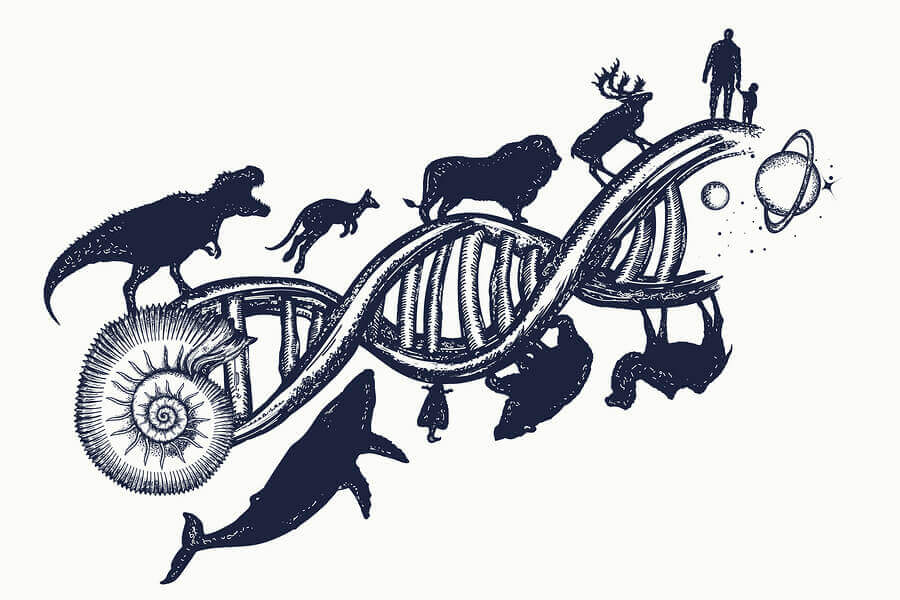
I believe the universe, at least the observable one, was created as a result of the big bang, an explosion of matter from a high density and high temperature state.  What caused this state, be it a singularity or a god or a computer simulation, I am unclear on.  The universe expanded rapidly and the high energy particles eventually cooled.  Particles began to be attracted to one another and eventually over time formed the stars, galaxies, black holes, planets, etc.

Earth was one of these planets created at some point and it was largely uninhabitable for a long time until such conditions were met that the building blocks of life could form.  Amino acids, lipids, nucleic acids, etc were formed and, over time and through some mechanism formed the first single cell organisms.  Whether some spontaneous spark occurred or whether some meteor crashed carrying some protein is unclear to me.  These building blocks of life increased in complexity until self replication was possible giving way to a precursor to genes.  In order to continue replication, the molecules needed to protect themselves and eventually cells were formed.  Keep increasing the complexity and given a ton of time, multi-cellular organisms form and then yadayadayada you get algae, fish, mammals, dinosaurs, humans, etc.  I’m glossing over a bunch of stuff because its a complex topic and I only have 250 words to say it.  A too long, didn’t read version would simply be science and physics and stuff.

Should teams with offensive names be forced to change?

Image result for cleveland indians

I do believe teams such as the Cleveland Indians or the Washington Redskins should change their names, but not on the grounds that it is “offensive”.  People get offended by all sorts of things including the use of “Happy Holidays” and certain subversive books being taught in schools.  Merely labeling the griefs Native Americans have with using their culture as a mascot paints the issue as an emotional feeling or opinion akin to that of someone clutching their pearls and gasping “Oh my word” at the sight of a person with too many tattoos.  It should, instead, be acknowledged that many of these names were used derogatorily in reference to Native Americans as they were being systematically wiped out from the lands they occupied by white settlers and the US government itself.  Native Americans still are by and large an oppressed people and I cannot imagine the psychological effects it must have to see a stadium full of people “honoring” the heritage that was nearly stamped out by doing a tomahawk chop at a baseball game.  Its ignorant cultural appropriation at best and dangerous revisionism at worst.  This coupled with the continually reinforced trope of the “noble savage” and the folklore in many American families that they have some Native American blood in there family is just another check on a series of injustices done to the Native American population.  Even Elizabeth Warren, whom I respect and admire, fell into this trap by releasing a blood test proving she had some Native American DNA from generations back.  She has not lived life as Native American nor has she dealt with any of those struggles, but she for some reason she thinks having possibly some faceless ancestor links her to this culture.  Americans as a whole could do a much better job at acknowledging our fuck ups and one way of doing this would be to get rid of these silly mascot names.  The culture and people still exist and they are saying its harmful so what is the argument.  Just pick an animal or a long gone, over-romanticized western population instead.

Reading vs Viewing Images

The page above is the start of Watchmen #4.  In the issue, Dr Manhattan narrates his thoughts as they jump through time.  His descriptions of the setting and place are clinical.  He is on Mars.  He is looking at photograph before dropping it.  He turns to gaze at the stars.  He refers to the photograph of being of a “man and a woman” without clarifying, at first, that it is him in the photograph before the accident that would turn him into a demigod and he is with the woman he once loved.   His words are cold and distant, but the juxtaposition of a happy photograph to that of a man standing on a dead planet staring into the void seen in the visuals of each panel complete the imagery of isolation and disconnection.

Authors put a great deal of effort in describing places, people, etc and we as readers are usually left a fair amount of room to fill in the gaps.  I have always struggled with visualizing these descriptions.  In William Gibson’s Neuromancer, he describes “The Sprawl” which is a massive mega city running from Atlanta to Boston.  Even after reading the descriptions, I couldn’t quite wrap my head around what something like that might look like.  It wasn’t until I saw the movie Blade Runner that this image I had read connected with me.

Image result for blade runner city

I do believe more interesting things can be done in terms of story telling when authors choose to use visuals and text together like that of a graphic novel.  However, when reading descriptions the flexibility given to the reader can also be beneficial in how it impacts the reader.  Maybe in a story there is an old, dilapidated house a group of people enter that is meant to be scary.  I immediately visualize a house that I swore was haunted when I was a kid.  If I were shown a visual of the house the author had in mind, it may not have the same effect on me.

Gender and Religion/Literature

Image result for persepolis

When looking at how gender influences literature and religion, it’s important to note that women were not given a lot of autonomy in much of the history available.  The Bible and The Koran both treat women as the lesser gender and in some cases are purely property of their fathers or husbands.  This has much to do with the societies at the time and the fact that most holy books were written, transcribed, and translated by men.  As society has progressed and women’s rights have evolved, the verses that used to keep women subjugated are ignored.  Christians no longer are demanding women retreat to their tents/rooms until their mensuration is over.  So, while the words in the Bible/Koran are an influence on their respective religions, gender equality and the advancement of society are also huge influences on religion.


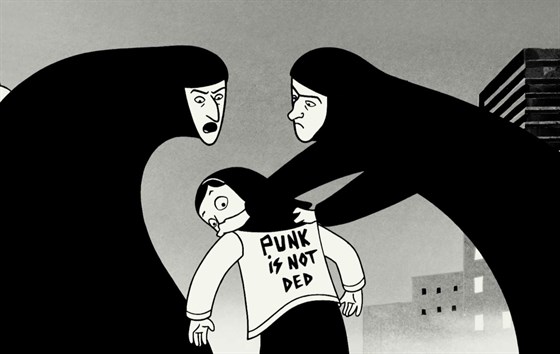
Moving away from religion, when it comes to literature, gender also plays a large role.  There are so many books out there written by men with amazing stories and characters except for the female character.  The females are often one-dimensional and serve the role of mother or lover.  This, of course, is not always true, but it does speak to one’s experience.  Men have the luxury of being able to be “above” the gender issue because they have been on top for so long.  Women have been and still are subjugated throughout the world and this has an impact on their writing.  In Persepolis, the main character is a great example of this as the main character wants to be a free spirit but is being repressed by the Islamic regime into wearing a veil.

Same Old Same Old

Stories of Noah and Lot in the Quran and the BibleI had a decent idea about what Islam was about going into doing a full reading of the Koran.  Most of it came from a religion class I took years ago and so I had a good understanding of its pillars and some of the central tenants of Islam.  I am not a fan of any organized religion and I have always found it hypocritical of people of other faiths, particularly in America, criticizing Islam as being some how not being deserving of respect and acceptance.
After having read the Koran more fully, I can’t say my views on Islam have changed at all, but more so strengthened my belief that holy books were written by men and not by some divine inspiration.  The Koran has the same inconsistencies and circular logic as the Bible, it just has the benefit of a couple hundred years to cherry pick certain scriptures and biblical stories to suit its narrative.  I can see the appeal.  The prayer provides structure to life and the idea of submission can seem freeing.  Its not unlike the Buddhist concept of letting the current take you where it will, but instead of submitting to the flow, you are submitting to God’s will.  The month of Ramadan is an especially interesting concept which I could see bringing people together through a commiseration of sorts.

While I can see its merits and appeal, its still rife with things I just find strange.  How can you accept Jesus was a prophet and the new testament is a holy book, but reject that Jesus was the son of God?  It’s the base of the story of Jesus and without it, his story falls apart and no longer has any meaning.   It would be like believing everything Isaac Newton taught, but thinking calculus isn’t true.

No Religion at the Dinner Table

Image result for thanksgiving argument

Religion is on that list of things you just don’t bring up along with politics, and, like politics, can end in some weird screaming match where no side feels very great afterwards.  Faith is a very personal thing for a large amount of people and it boils down to what they believe.  There is something very instinctual in people that when presented with a belief that is contrary to their own, instead of attempting to discuss or understand, it is seen as a personal attack.  Irrational as it may seem, its very much a defense mechanism.  I’m sure there is probably a little bit of tribalism and fear of outsiders sprinkled in their as well.  As such, it becomes much easier to just not say anything.  Live and let live and such.

I personally have had experiences where it just felt to me that brushing off silly comments about religion would have been the better way to go.  I remember a family member mentioning something about my use of the term “x-mas” and them commenting something along the lines of, “It’s Christmas.  Everyone keeps trying to take Christ out of it.”  I attempted to explain that the X in “x-mas” is based on the Greek letter Chi and has been used as short hand for Christ for hundreds of years.  This explanation was immediately ignored and met with a long diatribe about the use of “Happy Holidays” and I felt like the next time someone mentioned “x-mas” the same conversation would ensue.  While I used to love debating about religion, I am more apathetic now.  The most I do these days is the occasional eye roll.

Free Love and the Atom Bomb

1015614_orig58c9b5f16ff80159008b5360-960-720

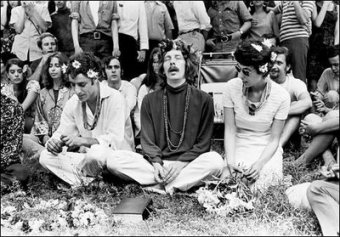
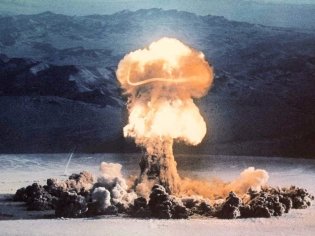
Cat’s Cradle and the culture of the 1960s have plenty of overlaps, but I think the ones in most need of highlight are the growing anti-war sentiment, nuclear paranoia, and the counter-culture (hippie) movements.

In 1962, a 13-day standoff between the US and the Soviet Union took place after the Soviet Union responded to the US nuclear capabilities in Turkey and Italy by placing its own nuclear missiles in Cuba.  This was arguably the closest the world has come to full scale nuclear war and the results could have been devastating.  The anti-nuclear weapon sentiment is shown throughout Cat’s Cradle both in the narrator’s dislike for Dr Felix for having created the atom bomb and the even more sinister ice-nine, a doomsday device that would freeze all water on earth even at the highest of ambient temperatures. The narrator also shows his disgust of the children of Dr Felix with the use of the label “son of a bitch” when describing them continuing to carry around their share of the ice-nine.

The narrator is initially a Christian but is seduced by the teachings of Bokonon.  Bokononism, offering its sweet lies, is a response to the prevailing wisdom that pursuit of truth is paramount to all else.  This rejection of the rigid cultural norms present in the west could also be seen in the hippie movement of the 1960s.  Free love, drug experimentation, and the shirking of conventional wisdom were some of the anti-establishment ideals seen in the hippie movement during the 1960s.  Hippie communes were made that sought harmony and utopian ideals not unlike some of the ideals in San Larenzo.  Women’s rights were another ideal found in the counterculture movements of the 1960s which could have something to do with Mona Monzano’s repeated attempts to stop being an erotic symbol to San Larenzo.

Do you think the Apology or Crito best explains Socrates fate?

Jacques-Philip-Joseph_de_Saint-Quentin_-_The_Death_of_Socrates_-_WGA20664

The Apology and Crito were both written by Plato after the death of Socrates.  The events that took place in The Apology, that is the trial of Socrates, were witnessed by Plato while the dialogue between Crito and Socrates on the potential escape attempt of Socrates must have been told second hand.   Both the Apology and Crito illuminate certain aspects of Socrates, both in his philosophy and his temperament.

The Apology shows Socrates at his best in his arguments about wisdom/ignorance and his dismantling of his accuser, Meletus, by using the Socratic method to put Meletus into a contradiction.  The Apology also shows Socrates at his worst, a self-righteous dick who demands an award as his punishment.  His pursuit of truth above all else is admirable, but his arrogance is ultimately what leads to his undoing.  The arguments presented in Crito are less compelling.  He argues that the majority are not to be listened to, but then argues that the laws are what matter.  Athens is considered a democratic society where one presumes the laws are decided by the majority.  He both personifies the law and holds it infallible at the same time.  This feels like a contradiction more in line with Plato’s philosophy presented in works like The Republic.  Also, one of the arguments is if you don’t like it move which continues to be a statement used by idiots today.

However, I believe that while some of the arguments Socrates presents in Crito are more Plato’s voice than his, the most compelling part of Crito is Socrates’s acceptance of his fate and his refusal to be something he’s not just for the sake of living.  When presented with the emotional argument of abandoning his sons, he explains that he can not raise his sons any better in exile than in death.  He wants his sons to be raised in Athens which Socrates holds in a very high regard.  He has spent almost his entire life in Athens and has spent it arguing and questioning and teaching.  To be exiled would mean leaving all that behind and if he could not continue to be who he is, what would be the point in living.

Even if the trial, his sentencing, or his refusal to escape had gone differently, it is possible Socrates thought that no matter the outcome, his life would have been altered in such a way as he would no longer be able to do what he loved.  This could also go on to explain his cavalier attitude and his resignation to death.

What are the differences between reading and hearing stories?

Odyssey_16x9-1

“Now when the child of morning, rose-fingered Dawn, appeared…”

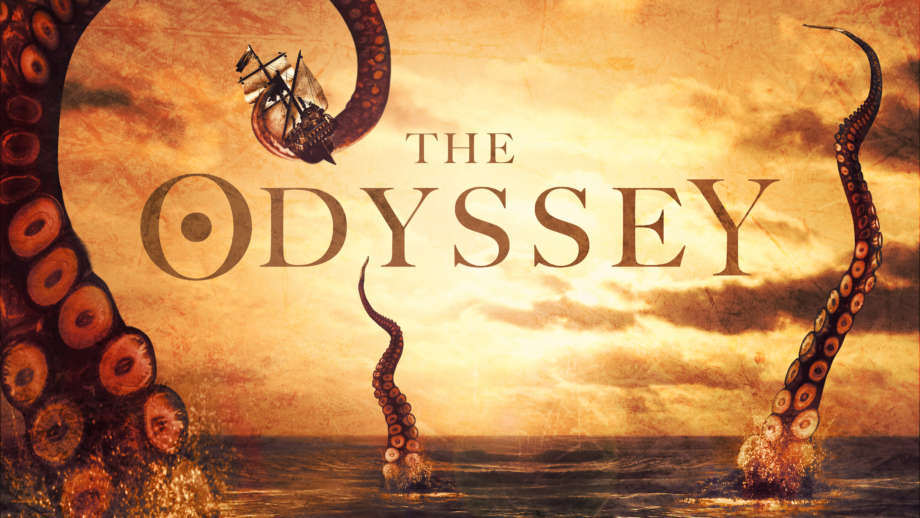
This line is the first of Book II of the Odyssey and our introduction to the hero Odysseus, however, it will repeat itself over and over to a laughable extent as one progresses through the epic tale.  It seems to be the classical equivalent of “He awoke to his alarm clock buzzing…”  The repetition, which is also seen heavily in The Epic of Gilgamesh. was very common for these classic myths as most were conveyed orally.

This idea of the spoken word story as professional entertainment is still alive and well today.  Of course, there are the audio books which bring the written page to the ear, but more in line with the tradition are podcasts and stage shows.  One such show/podcast is The Moth.  These are live shows where “true” stories are told by storytellers, writers, comedians, etc where they are allowed no notes or prompts.  They control the beats of the story, how quickly the words are said, the comedic timing, the suspense.  This is something that is lost when simply reading the words on the page.  Some authors are masters of making one read frantically or to slow down (James Joyce comes to mind), but the spoken word story teller has the unique position to do this for the listener.  It makes for a more engaging experience especially in a crowd of others laughing or crying alongside you.  The reaction of the crowd can also change how the story teller decides to proceed.  Perhaps a big laugh was received or a stunned silence at a shocking moment.  These events can be used to ad-lib additional lines or maybe reign in some of the language that is not being so taken well.  There is a freedom to cater the story to the audience for a unique experience that just does not exist in the rigidity of the written page.

The spoken story, however, does not allow for reflection in the moment.  Reading a novel allows for breaks in the narrative to happen where one can take the time analyze the prose or dissect a phrase.  Maybe a particular line sparks a train of thought and the mind starts to wonder.  Everyone has gone back and read a page or two over again after they realized they didn’t absorb any of the information.  If you are listening to a spoken word story, these distractions can mean missing integral parts of the story.  Fortunately, everything is being recorded so at least you can hit that 30 seconds back button on your Podcast app to go back and figure out what you missed.